Resin bound vs resin bonded comes down to how the stone is fixed. Resin bound mixes stone and resin into a smooth surface that water can pass through. Resin bonded scatters stone onto a resin coat, and water runs off it. Block paving sits alongside both, and permeable block paving drains too, so the right driveway depends on drainage, looks and upkeep.
At a Glance
- Resin bound: stone mixed with resin and trowelled smooth, with no loose stones.
- Resin bound lets water through, but only when it is laid on a permeable base.
- Resin bonded: resin spread first, then stone scattered on top for a gravel look.
- Resin bonded does not let water through, so the run-off needs somewhere to go.
- Block paving: individual blocks that can be lifted and relaid if a repair is needed.
- Permeable block paving has wider joints that let rain soak through to the base.
- Over 5 square metres of front garden paving that does not drain needs planning permission.
- A new dropped kerb needs the council's permission first.
What Is the Difference Between Resin Bound and Resin Bonded?
The two names sound alike, but they are different ways of making a surface. The difference shows in how the finished driveway looks, feels and drains.
Resin bound
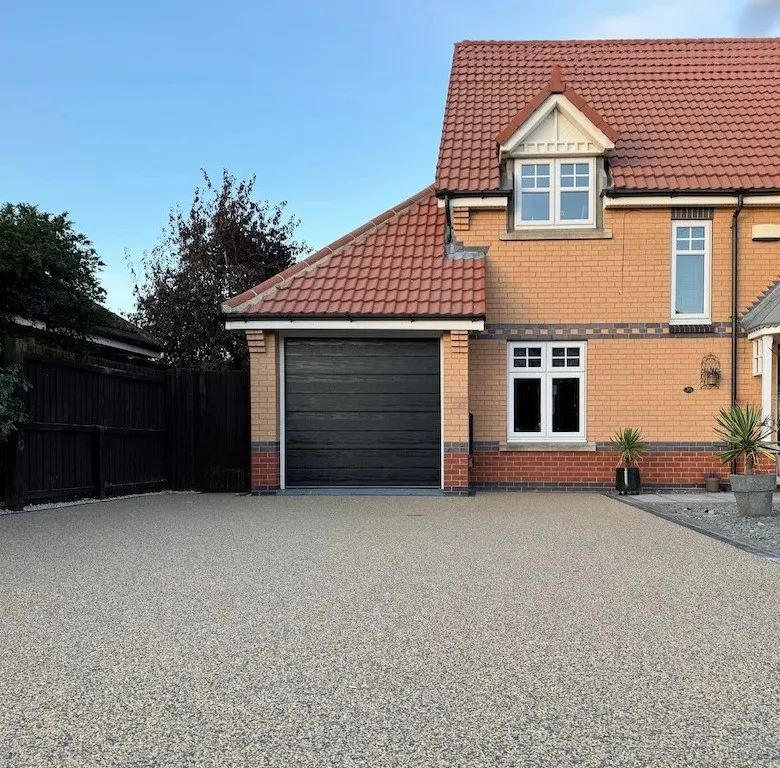
With resin bound, the stone is mixed with resin before it goes down. The mix is then trowelled out to a smooth, flat finish. Every stone is held in the resin, so there is no loose gravel.
Tiny gaps are left between the stones. SureSet, a resin bound manufacturer, says these voids let water pass through the surface. That only helps if the layer underneath drains as well.
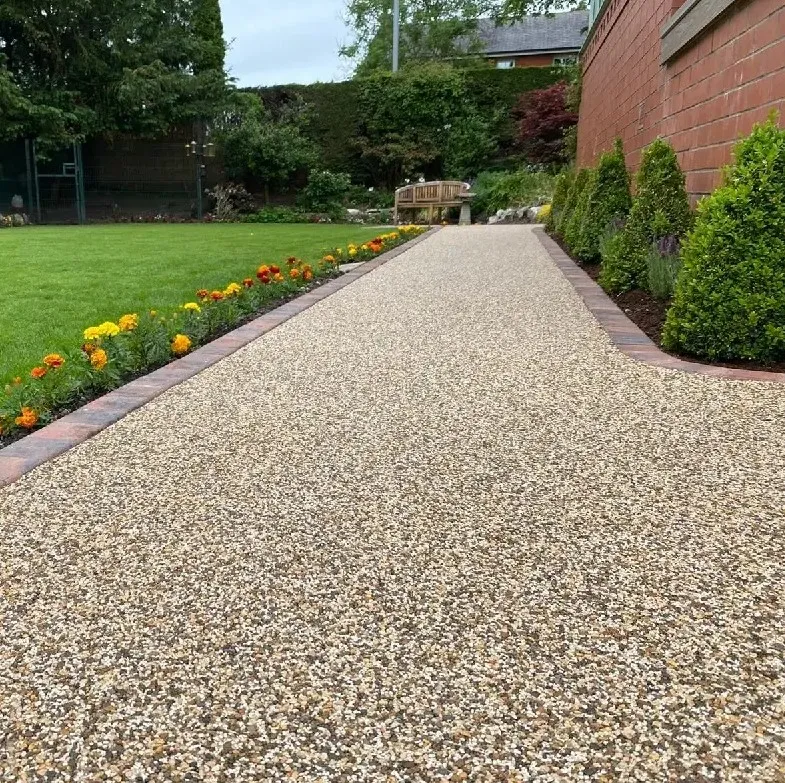
The photo above is a resin bound garden path rather than a driveway. It shows the smooth, even finish you get when the stone is mixed in.
Resin bonded
With resin bonded, a coat of resin is spread over the base first. Loose stone is then scattered into it. Once it sets, the spare stone is swept away.
The result looks like gravel and has a textured, grippy feel underfoot. Water cannot pass through it, though. Suppliers also note that some stones can remain loose.
Resin Driveway vs Block Paving: How Does Block Paving Compare?
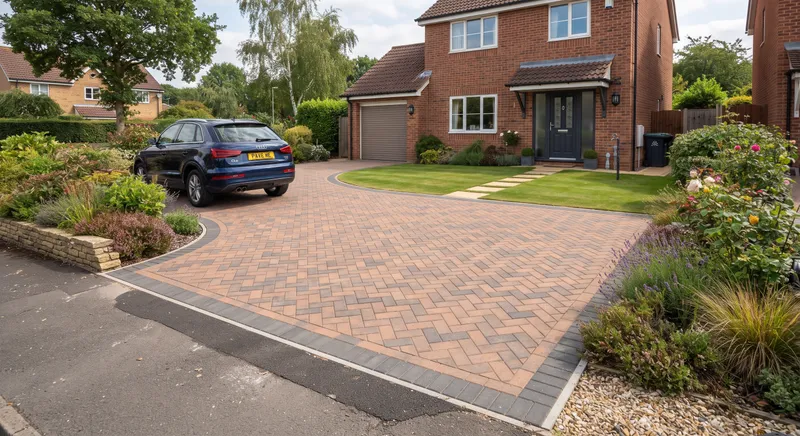
Block paving is made of separate blocks laid in a pattern, such as herringbone. The joints between them are filled with sand. Because each block is separate, sections can be lifted and relaid with the original blocks.
Standard block paving is not designed to drain through the surface. Rain runs off it, so it needs a drain, a soakaway or a border to run onto.
Permeable block paving
Marshalls, a paving manufacturer, says permeable block paving has wider joints filled with a permeable material, such as fine aggregate. Rain soaks through those joints into the base below.
Interpave, the trade body for concrete block paving, says the water is stored there and released slowly. Its "Paving for Rain" guide is written for homeowners laying driveways.
Resin Bound vs Resin Bonded vs Block Paving Compared
| Resin bound | Resin bonded | Block paving | |
|---|---|---|---|
| Drainage | Water passes through on a permeable base | Water runs off | Runs off, unless it is permeable block paving |
| Look | Smooth, even stone finish | Looks like loose gravel | Pattern of individual blocks |
| Texture | Flat and smooth | Rough and grippy | Flat, with joints between blocks |
| Loose stones | None | Some can remain loose | None |
| Upkeep | Sweep off leaves and grit | Sweep off leaves and grit | Sweep, and top up joint sand |
| Weed growth | Weeds can root in dirt left on top | Weeds can root in dirt left on top | Weeds can root in the sand joints |
| Repairs | One continuous layer, so ask how a repair would be done | One thin layer, so ask the same | Blocks can be lifted and relaid |
| Base needed | A permeable base to drain, or a sound solid base if not | A solid base, with drainage for the run-off | A sub-base, which must be permeable for permeable paving |
Do I Need Planning Permission to Pave My Front Garden?
For a house in England, the rule turns on drainage. Government guidance on the permeable surfacing of front gardens sets it out.
- You do not need permission if the new surface is permeable or porous.
- You do not need permission if rainwater runs to a lawn or border and drains naturally.
- You do need permission to cover more than 5 square metres with a surface that does not drain.
So resin bound on a permeable base and permeable block paving can usually go ahead without an application. Resin bonded or standard block paving over 5 square metres needs the water directed to a border, rain garden or soakaway.
The Planning Portal notes these rules are for houses only. They do not apply to flats, maisonettes or converted houses.
They also do not apply where a planning condition or Article 4 Direction removes these rights. If you live in a conservation area or a listed building, check before you start. Ask Buckinghamshire Council or check the Planning Portal for your own case.
Why the rule exists
The government guidance explains that many floods happen because drains cannot cope with the rain flowing to them. Paving front gardens adds to that. Hard surfaces also collect pollution, which washes into drains and can reach streams and rivers.
A note on clay soils
The same guidance says a draining driveway or rain garden needs sandy or gravelly soil underneath, not clay. On very clayey sites, it suggests a pipe in the sub-base. That stops water sitting under the driveway for long periods.
Do I Need Permission for a Dropped Kerb?
Yes. The Planning Portal says you need a dropped kerb to drive over a pavement onto your property. It says it is illegal to do so without one.
In our area, Buckinghamshire Council issues a vehicular access licence for this. Before you apply, you need planning permission, or a letter from its Planning Team saying none is needed. The work must be done by a contractor with a New Roads and Street Works Act 1991 qualification.
How Do I Choose Between Them?
Start with how you want the driveway to drain. Then think about the look you like and the upkeep you are happy with.
- Choose resin bound if you want a smooth, even finish with no loose stones. Lay it on a permeable base if you want it to drain.
- Choose resin bonded if you like the look of gravel but want the stones fixed in place. Plan where the rainwater will go.
- Choose block paving if you like a traditional pattern and want repairs to be simple.
- Choose permeable block paving if you want that look and a surface that drains through.
Whichever you pick, keep it clean. The government guidance says to sweep up leaves, mud and litter before they clog a permeable surface. It also says to pull weeds by hand or use a weed burner, not weed killer.
For block paving, Marshalls says weeds usually take root in the sand joints or in dirt left on top. Pull them out, then top the joints back up with sand.
Talk to Us About Your Driveway
We are a family-run team based in Hazlemere. We lay resin bound, resin bonded and block paved driveways across south Buckinghamshire.
Jack will visit, look at your front garden and how it drains, and talk the options through. You then get a free, written quote. See our driveways page to find out more.