A storm damaged fence can be repaired if its posts are sound, but rotten posts mean replacing it. This guide covers safety, the repair or replace checks, ownership, insurance, planning rules and building a stronger fence.
At a Glance
- Keep away from the sheltered side of a storm damaged fence until it is made safe.
- Check the fence posts first. Sound posts usually mean a repair is possible.
- Loose or broken panels between sound posts can be refixed or replaced one at a time.
- Replace the whole fence when posts are rotten along the run or damage is widespread.
- Deeds and "T" marks often show who maintains a boundary fence, but not always.
- Some home insurance policies exclude storm damage to fences, so read the wording first.
- A replacement fence up to 2 metres high does not usually need planning permission.
Make a Storm Damaged Fence Safe Before Any Work
Safety comes before any repair. A leaning fence can still fall, and storms bring down other hazards with it.
The Met Office storm advice says to keep away from the sheltered side of fences and walls. If they fail, they collapse on that side.
Safety checks after a storm
- Keep children and pets away from the side the fence leans towards.
- Never touch electrical or telephone cables that have been blown down.
- Keep clear of walls and trees that the storm may have weakened.
- Lay loose panels flat or move them somewhere sheltered, so the next gust cannot throw them.
- Photograph the damage from both sides before anything is moved.
Check the Fence Posts First: They Decide Repair or Replace
The fence posts decide whether a fence can be repaired. Panels can be swapped, but a weak post will let the next storm push the fence over again.
Fence maker Jacksons names rotten posts as the most common reason a fence fails in a storm. Shallow posts and rusty fixings are also on its list.
Signs a post has failed
- The post leans or rocks when pushed at the top.
- The timber is soft or crumbles at ground level.
- The post has snapped.
- The concrete footing has lifted or cracked.
- The nails, screws or brackets have rusted through.
Check every post along the run, not just the ones beside the gap. A post that held this time may already be rotten below the surface.
When Fence Repair Is Enough
Fence repair is enough when the posts are sound and only a few panels or fixings have failed. A repair is quicker and costs less upfront.
Jacksons also calls repair a short-term solution that is more likely to fail again. It advises replacing a panel beyond repair quickly, before the posts are affected.
Repair options
- Refix a panel: a panel that has lifted out of its slot or brackets can be refitted and fixed again.
- Replace a panel: a split or broken panel between two sound posts can be swapped for a new one.
- Replace the fixings: rusted nails, screws and brackets can be replaced so the panels hold again.
- Replace one post: a single snapped post can be dug out and reset, then the panels rehung.
Pro Tip: measure the gap between the posts before ordering new fence panels. Posts can shift in a storm, so the old panel size may no longer fit.
When to Replace a Storm Damaged Fence
Replace a storm damaged fence when the posts or timber have failed along much of the run. Jacksons' rule of thumb is to replace once rot or damage affects more than about 20% of the fence.
Storm damage on a sound fence is different from a fence failing through age and rot. A sound fence hit by one storm can often be repaired. An old fence that blew down because it was rotten will keep failing.
| Damage found | Repair or replace | Why |
|---|---|---|
| One or two panels blown out, posts sound | Repair | The posts can hold new or refitted panels. |
| Panels intact, fixings rusted | Repair | New fixings hold the panels again. |
| One post snapped, the rest sound | Repair | The rest of the run can still hold the panels. |
| Several posts rotten or loose | Replace | Rotten posts cannot hold panels in the next storm. |
| Rot or damage over about a fifth of the fence | Replace | Past about 20%, Jacksons advises replacing the fence. |
| The same run has blown down before | Replace | Repeated repairs on a weak fence keep failing. |
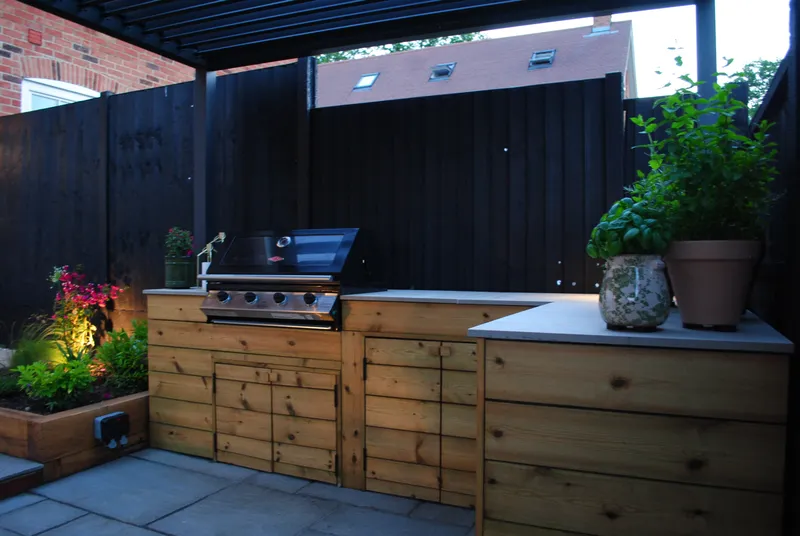
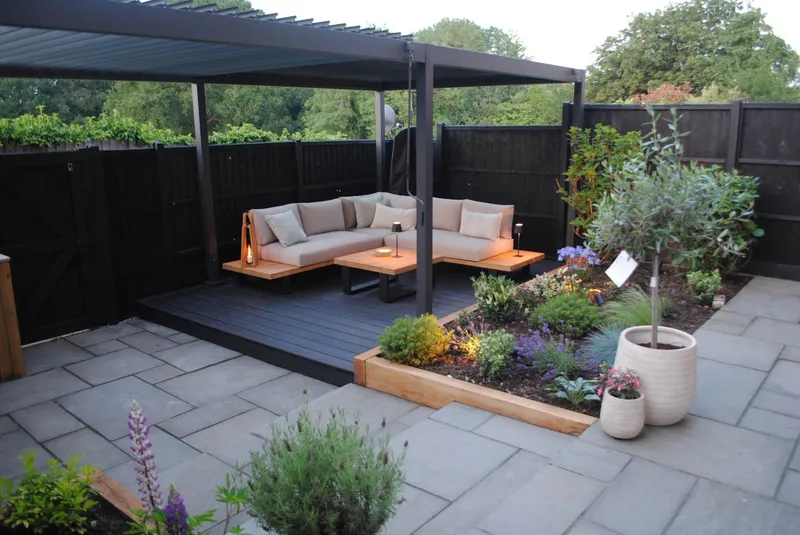
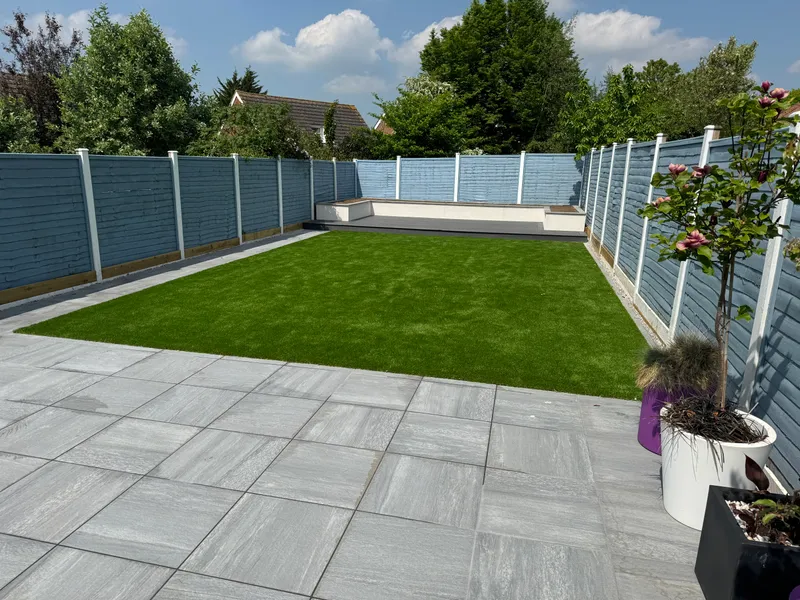
A full replacement can be planned with other garden work. New fencing went in alongside paving, decking and an outdoor kitchen in this High Wycombe garden makeover. The guide to planning a garden makeover over winter covers the steps.
Who Is Responsible for a Fence Blown Down Between Neighbours?
The title deeds are the first place to check who maintains a boundary fence. There is no rule that the fence on the left or right belongs to that house.
HM Land Registry guidance sets out what the deeds can show:
- "T" marks on a deed plan often show who maintains a boundary feature, but they are not always conclusive.
- A deed may include a covenant, a legal promise to maintain a fence or wall.
- Title plans usually show only the general position of a boundary, not the exact line.
- HM Land Registry cannot decide or resolve boundary disputes between neighbours.
Where the deeds are unclear, neighbours can make a boundary agreement. Agree who pays and what replaces the fence before work starts on a shared boundary.
Does Home Insurance Cover a Storm Damaged Fence?
It depends on the policy wording, and some policies exclude storm damage to fences. Check the buildings policy before booking any work.
Financial Ombudsman decisions show both outcomes. One policy excluded storm damage to fences and the exclusion stood. In another case, trees blown down in a storm destroyed a fence. The fence was covered because the trees caused the damage, not the wind.
The Ombudsman asks three questions when a storm claim is refused:
- Was there a storm on the date the damage happened?
- Is the damage consistent with storm damage?
- Were storm conditions the main cause, or would the damage have happened anyway?
The third question matters for fences. Policies often exclude wear and tear, so a rotten fence that blew down may be refused. The insurer has to prove an exclusion applies.
Planning Rules for a Replacement Fence
A replacement fence does not usually need planning permission if it stays within the height limits. The Planning Portal sets out the rules:
- up to 2 metres high from ground level
- up to 1 metre high next to a road used by vehicles, or its footpath
- an existing fence above these limits can be replaced, as long as it is not made higher
- permission is needed if the house is listed, or the fence borders a listed building
- an Article 4 direction or planning condition can remove the right to put up a fence
- in a conservation area, taking a fence down may need permission
Check with the local council before work starts in a conservation area. Garden buildings near a boundary follow their own height rules, set out in the garden room planning guide.
Build the Replacement Fence to Stand up to Storms
A stronger fence comes from deep posts, enough concrete, properly treated timber and panels that let wind through. Each one fixes a common cause of storm damage.
Set the fence posts deep
Jacksons recommends posts at least 600mm into the ground, and deeper for higher fences. It suggests a 2.4m post for a 1.8m fence, set in about 60kg of concrete.
Use posts treated for ground contact
Timber posts in the ground must be treated to Use Class 4 under BS 8417. This guidance comes from Timber Development UK and the Wood Protection Association. Any cut end needs two brush coats of end grain preservative. The cut end must never go into the ground.
Choose fence panels that let wind through
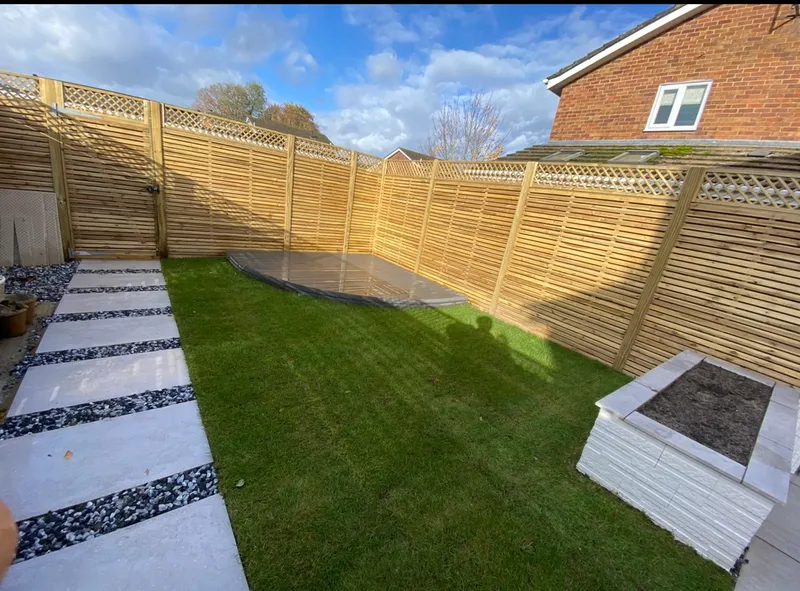
In strong winds, a solid panel behaves much like a sail. Slatted panels let air pass through the gaps, which reduces pressure on the panels and posts.
| Panel style | Strengths | Trade-offs |
|---|---|---|
| Solid (closeboard or lap) | Full privacy and a solid screen | Takes the full force of the wind |
| Slatted | Lets wind through, so less strain on the posts | Gaps give less privacy. Wind resistant, not windproof |
Common mistakes to avoid
- Hanging new panels on old, rotten posts.
- Setting posts too shallow, or with too little concrete.
- Using posts not treated to Use Class 4.
- Burying the cut end of a treated post.
- Raising the fence above 2 metres without checking the planning rules.
- Starting work on a shared boundary before the neighbour agrees.
Conclusion
A storm damaged fence can be repaired when the posts are sound and only a few panels have failed. Rotten or loose posts along the run mean a full replacement. Check the deeds for ownership and the policy wording for cover before work starts. A replacement on deep, treated posts with wind-friendly panels stands up better to the next storm.
Contact FirstScapes
We are a family-run landscaping team based in Hazlemere, building new and replacement fences across Buckinghamshire and the Chilterns. Our timber fencing carries a 5-year guarantee. We will visit, check your posts and the whole run, and send you a free written quote. See our fencing service to get started.
Storm Damaged Fence FAQs
Can a fence be repaired after a storm?
Yes, if the posts are sound. Loose or broken panels can be refixed or replaced, and rusted fixings renewed. Rotten or snapped posts need replacing before any panel goes back.
Who pays when a fence is blown down?
The person responsible for the boundary fence usually pays. The deeds may show this with "T" marks or a covenant, but these are not always conclusive. Buildings insurance may help, depending on the policy wording.
Does a replacement fence need planning permission?
Not usually, if it is no higher than 2 metres, or 1 metre next to a road. Listed buildings, conservation areas and Article 4 directions can change that.
Which fence panels are best for a windy garden?
Slatted fence panels let wind pass through, which puts less strain on the posts. They are wind resistant, not windproof. Deep, well-concreted posts matter just as much as the panel style.