The best small patio ideas keep things simple. Pick one main use, put the patio where it gets the light you want, and choose a few larger slabs in one pale colour. Add seating that doubles as planting, then grow upwards, and a small patio will feel calm, roomy and easy to live with.
At a Glance
- Decide what you want from the patio first: low maintenance, entertaining or a fresh, modern look.
- Watch where the sun falls through the day before you pick a spot.
- Larger slabs and fewer joints make a small space look calmer.
- One pale paving colour that runs right through feels bigger than a mix.
- Built-in seats and raised beds save floor space and add storage.
- Climbers and a few large pots add green without eating into the floor.
- Low, soft lighting lets you use the patio on dark evenings.
- A patio raised more than 30 cm above the ground needs planning permission.
Start with How You Want to Use It
In a small garden, you cannot fit everything in. Garden designers at the RHS Chelsea Flower Show say it is much better to do a couple of things really well.
So the best patio ideas for small gardens start with one question. What do you want the space to do for you?
- Low maintenance. Keep it clean and tidy with just a sweep.
- Entertaining family and friends. Room for a table, chairs and some lighting. Perfect for creating a nice vibe when hosting.
- Sprucing up and modernising the space. Larger slabs, clean lines and a fresh colour can bring a tired garden up to date.
For many people it is a mix of all three, or something else entirely.
Get that right, and the rest of the design follows. You end up with a space you use every day, not one you squeeze past.
Where Should a Small Patio Go?
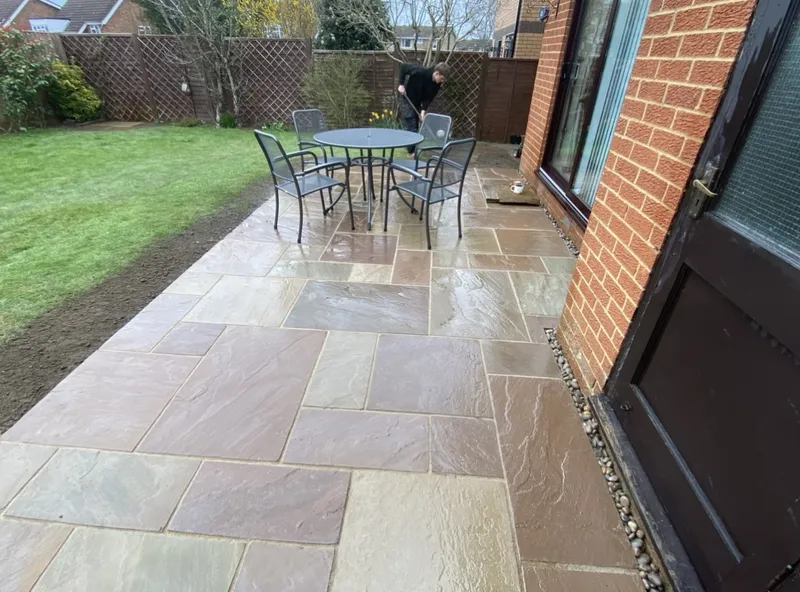
Next to the back door is the obvious place, and often the right one. It is handy for carrying food out, and it links the house to the garden.
But the sunniest spot may be at the far end. Spend a day noting where the sun sits in the morning, at lunch and in the evening. Put the patio where the light suits the way you will use it.
Shelter matters too. The RHS advice on small exposed spaces says slatted or mesh screens filter wind better than solid walls. Solid walls can cause gusts on the other side.
Small Patio Design Ideas That Make the Space Feel Bigger
Good patio designs for small gardens share one aim: fewer lines and less clutter. A few simple choices make a small patio feel more generous than it is.
Use fewer, larger slabs
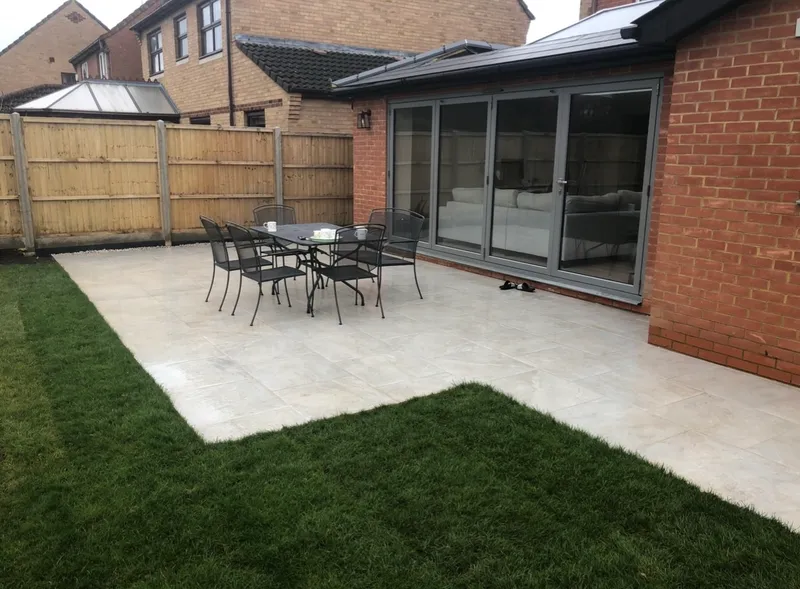
Lots of small slabs mean lots of joints, and the eye reads every line. Larger slabs give a cleaner, calmer floor. That makes the whole space look wider.
Keep to one light colour
Pale paving bounces light around and looks fresh. Using the same colour from the door to the edge stops the patio feeling chopped up. If the paving tone is close to your indoor floor, the room and garden seem to flow together.
Try a curve or a circle
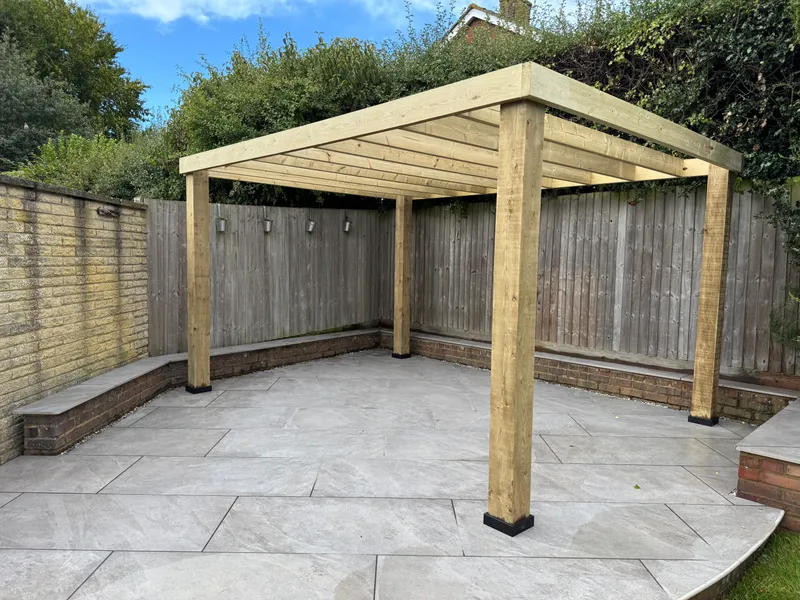
A curved edge softens a small square garden. A round patio set into the lawn makes a natural spot for a table. It also leaves the corners free for planting.
Lay the paving to lead the eye
Slabs laid lengthways down a narrow garden make it look longer. Laid across, they make it look wider. A diagonal pattern can stretch a small square plot in both directions.
Seating and Storage Ideas for Small Patios
Loose furniture fills a small patio fast. Built-in seating gives you somewhere to sit without the clutter.
- A low brick wall around the patio doubles as a long bench.
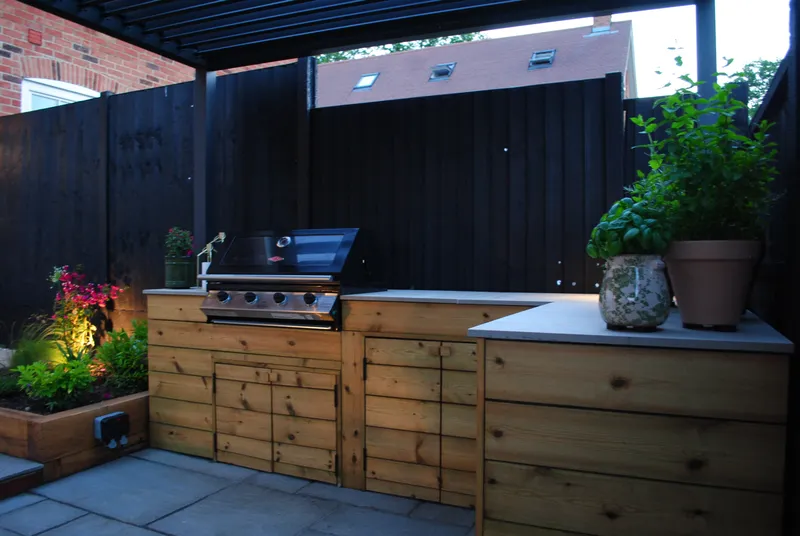
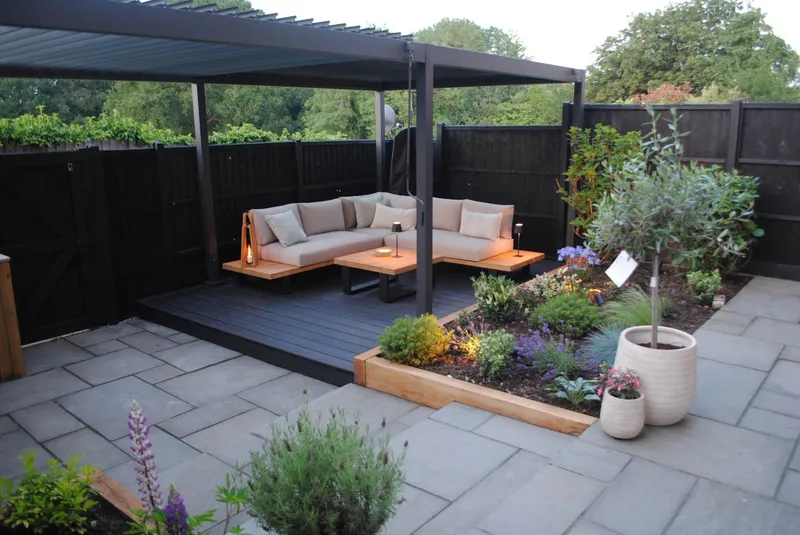
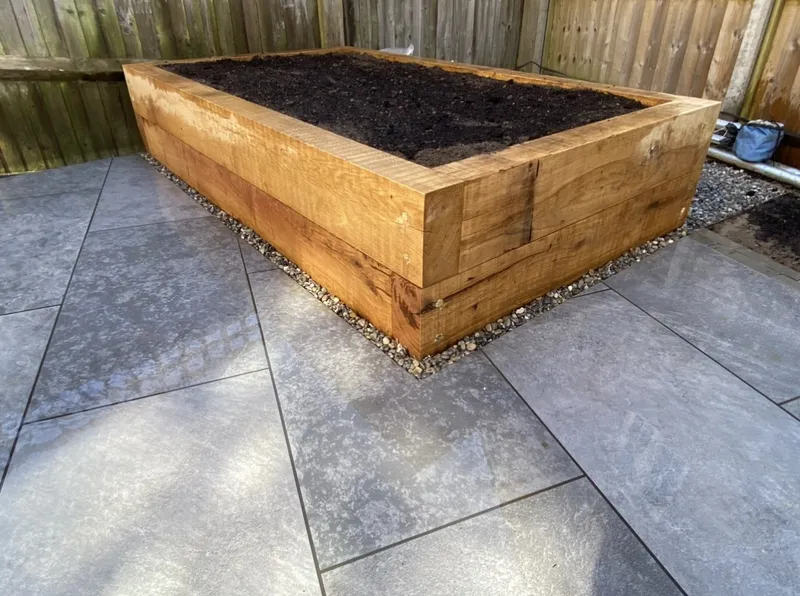
- Raised beds with a wide coping give you planting and perching space in one.
- A storage bench hides cushions, toys and tools away.
- Folding chairs come out when guests arrive and stack away afterwards.
Built-in seats also mark the edge of the patio clearly. That frames the space and makes it feel finished.
Planting Ideas for a Small Garden Patio
Plants soften hard paving and make a patio feel like part of the garden. In a small space, the trick is to grow up, not out.
Grow upwards
RHS Chelsea designers suggest using walls and fences to double your planting area. Climbers add height and green without using up floor space. A trellis panel or a set of wires along a fence is all most climbers need.
Choose a few big pots
The same designers say a few large statement pots look better than lots of small ones. They also advise picking a bigger pot than you think you need, so the plants have room to grow.
Mix the heights of your pots for a layered look. Pots you can move are handy too. You can shift them to make room for a party.
Look after your pots
The RHS guide to container care gives some simple rules:
- Check pots for moisture daily in warm or windy weather, and twice a day in hot spells.
- Overwatering is the most common reason container plants die, so aim for moist, not soggy.
- Take away saucers in winter, so pots are not left standing in water.
- If water drains slowly, check the drainage holes for a blockage.
Tiny Patio Ideas for Awkward Spaces
Small garden patio ideas do not need much room. Even a very small area can work as a patio. Some tiny patio ideas that make the most of odd corners:
- A side return can take a narrow strip of paving, a bench and climbers on the wall.
- A sunny corner at the end of the lawn fits a bistro set and two big pots.
- A wide step outside the back door can hold a chair and a pot of herbs.
- Stepping stones through gravel link a small patio to the rest of the garden.
Keep the paving to the area you will really use. A smaller patio with planting around it often feels nicer than paving the whole plot.
Lighting a Small Patio
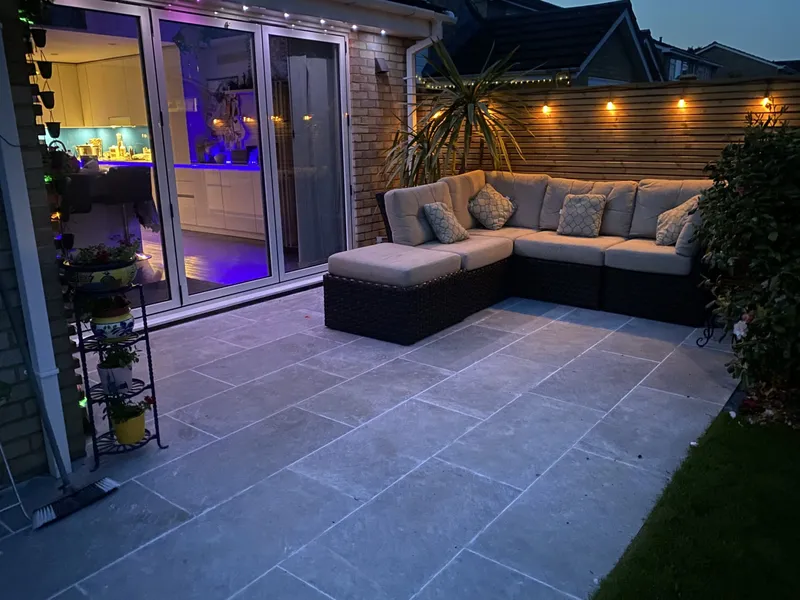
Good lighting means you can sit out on mild autumn evenings, not just summer ones. In a small space, keep it soft and low.
- Wall lights wash the house or fence with a gentle glow.
- Small lights set into steps or seat walls stop trips in the dark.
- A string of festoon lights adds a relaxed feel above a table.
- Uplighting one climber or tree gives the eye a focus at night.
Our garden lighting page covers the options in more detail.
Small Patio Ideas UK: the Rules Worth Knowing
Most back garden patios do not need planning permission. A few things can change that.
Raised patios
The government's technical guidance treats any platform over 0.3 metres high as a raised platform. A raised platform needs planning permission. On sloping ground, height is measured from the highest part of the ground next to the house.
Front garden patios
The Planning Portal says permeable paving of any size does not need permission. Over five square metres of paving that does not drain does need it, unless water runs to a lawn or border. These rights apply to houses, not flats or maisonettes.
Screens and fences
A privacy screen counts as a fence. The Planning Portal rules on fences and walls say you usually need permission above two metres high. Next to a road used by vehicles, the limit is one metre.
Practical Points for a Small Patio
A small patio still needs the same groundwork as a big one. Getting it right means a patio that stays level and dry for years.
- The patio should fall gently away from the house, so rain runs off and not towards your walls.
- A firm sub-base under the slabs stops them sinking or rocking.
- Ask for the slip rating of any paving, as shady patios can get slippery in winter.
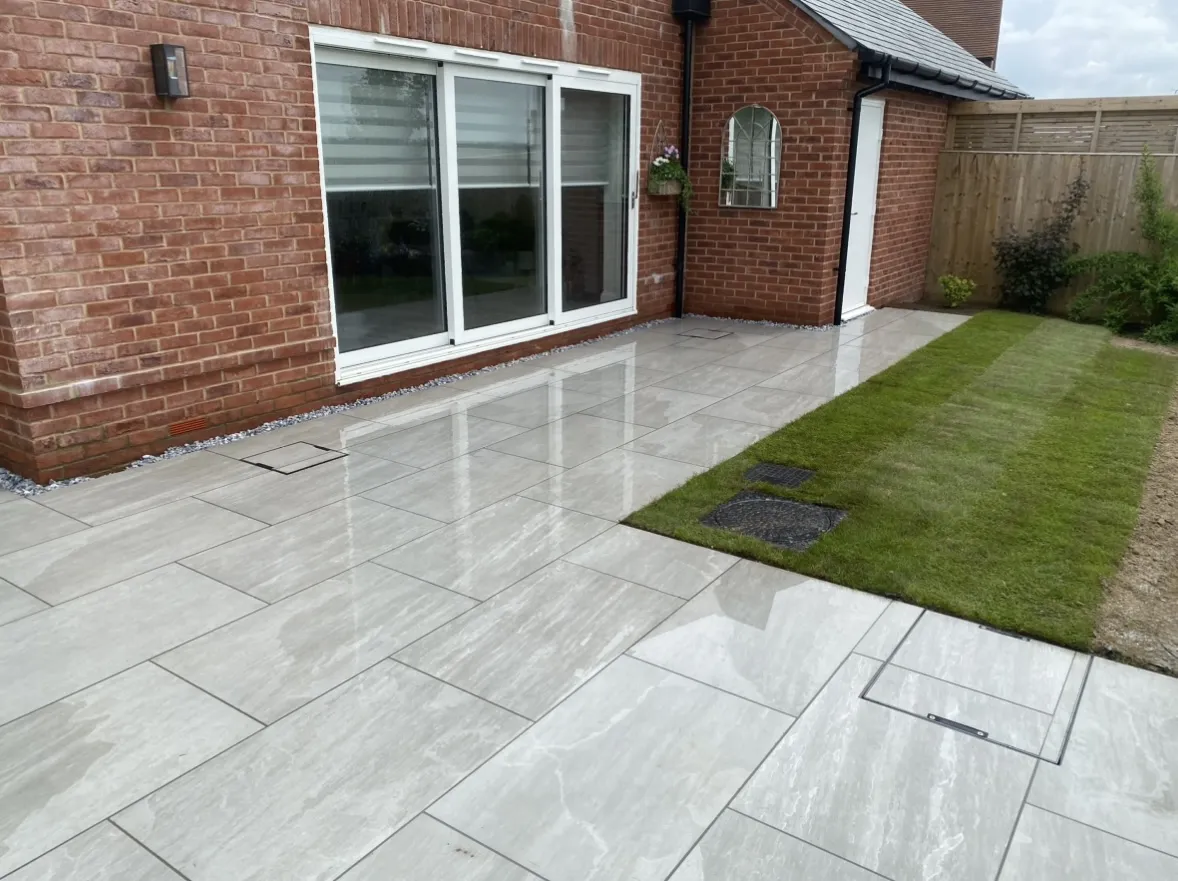
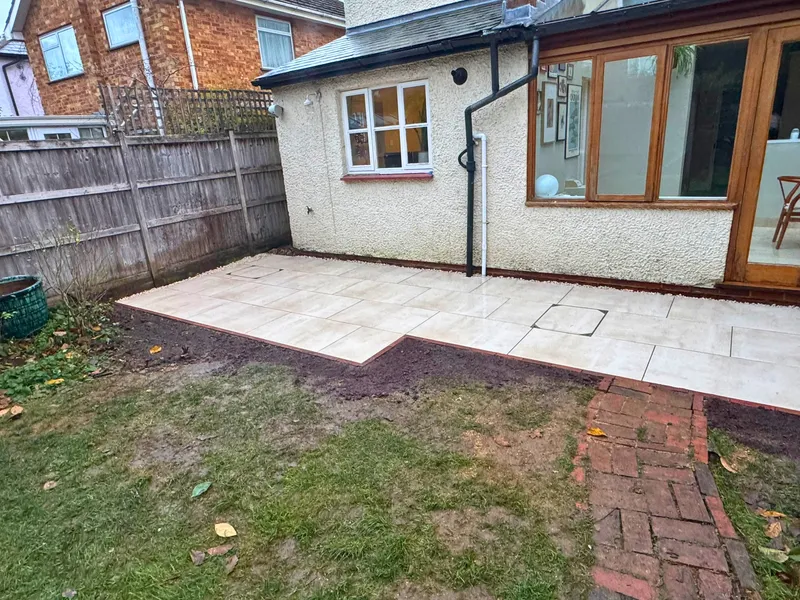
- Manhole covers can sit in a recessed tray, so they blend in with the paving.
You can follow those steps on a real job in our Prestwood patio project. It shows old decking coming out and a new patio going in, stage by stage.
Plan Your Small Patio with FirstScapes
We are a family-run landscaping team based in Hazlemere, working across Buckinghamshire. Jack will visit, talk through how you want to use the space and send a free written quote. He can turn these small patio ideas into a plan for your garden. See our patios and paths service to get started.